
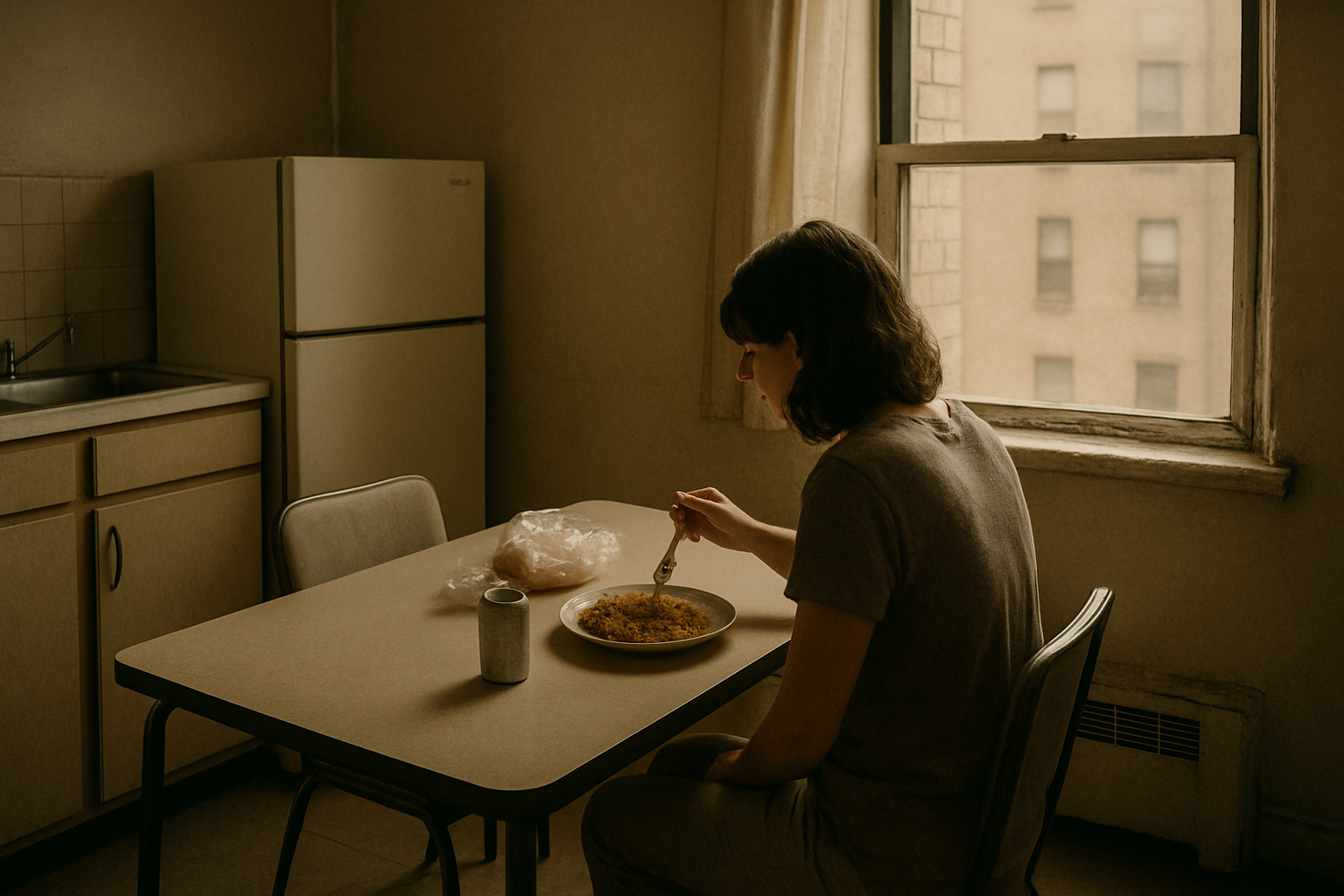
You may be trying to eat a little better while your budget is thin, your calendar is chopped up, and your life still feels split into before and after. Cooking from scratch every night may be out of reach right now, but food still shapes how the day goes. This is for the level of, “What can I do this week with what I have?”
What this covers
- What “eating better” means when survival mode is still in the room
- The cheapest upgrade is often fewer food decisions, not better recipes
- A 10-item grocery list can carry most of the week
- Time versus money: when convenience food is the smarter choice
- Where most food plans fall apart by Wednesday
- Build a two-layer meal system: one real meal, one backup meal
- The 15-minute reset for your kitchen, budget, and next three meals
- Mornings, energy, and the case for eating earlier than you feel like it
- Take this week’s easiest win first
What “eating better” means when survival mode is still in the room
For this week, eating better means steadier, more filling, less chaotic food. Fewer skipped meals. Fewer long stretches where you suddenly realize you haven’t eaten. Fewer expensive last-minute choices because there was nothing easy at home. The goal isn’t a full reset. It’s a little less drag.
Hard seasons can throw your eating off in predictable ways. You buy groceries with good intentions, then come home too tired to turn them into meals. Or you wait too long, then spend far more than planned on takeout, convenience-store snacks, or whatever’s open nearby. Or you keep shopping for a version of yourself who has an hour to cook and a clear head to plan. This article assumes you may have neither.
Workable food is still food.
If your meals are repetitive for a while, that’s fine. If some come from a microwave, a toaster, or a can opener, that’s fine too. Improvement under pressure often looks plain: oats with peanut butter and banana when you’re half-awake, the same lunch three times, pasta with frozen vegetables after 6 p.m. when you can’t do one more complicated thing. In this writer’s opinion, the pressure to keep meals interesting is wildly overrated during hard stretches; boring meals that get eaten beat aspirational meals that rot in the fridge.
The cheapest upgrade is often fewer food decisions, not better recipes
The fastest way to eat better this week is to stop asking yourself what sounds good every time you need food. Pick three no-brainer meals: one breakfast, one lunch, one dinner. Keep them simple enough to make when you’re distracted or tired. Oats with peanut butter and banana works. Rice and beans works. Pasta with frozen vegetables works. Scrambled eggs with toast works if eggs fit your budget this week.
Use a same-until-boring rule for seven days. Repeating meals cuts planning fatigue, lowers waste, and makes shopping easier because you know exactly what to buy. It may feel dull, but dull is often cheaper than decision overload. When life already asks too much of you, a default breakfast helps more than a “healthy recipes” tab open on your phone.
Give yourself one convenience exception. Buy one shortcut on purpose: Ben’s Original Ready Rice, a bagged salad, rotisserie chicken, pre-cut vegetables, jarred pasta sauce, or canned soup. It costs more than the bare-minimum ingredient version, but it may still cost less than delivery or an impulse meal on the way home.
If one bought shortcut keeps dinner from unraveling twice this week, it earned its place.
This step falls apart when the meals are still too ambitious. If your “easy dinner” includes chopping five ingredients and washing two pans, it’s not easy enough for the week you’re actually having.
A 10-item grocery list can carry most of the week
A short list does two useful things: it limits spending and turns random groceries into actual food. Here is a basic ten-item list built from low-cost staples that show up in many stores:
- Oats
- Eggs
- Rice
- Pasta
- Beans
- Bread or tortillas
- Peanut butter
- Frozen vegetables
- Bananas
- Yogurt or milk
You won’t need every item every week. Use what you already have first. If you already own rice and pasta, skip one and use the money for something else. If yogurt costs too much where you shop, leave it out. The point isn’t the exact list. It’s a small set of basics that combine easily.
When cash is very tight, set a hard number before you enter the store and treat it as fixed. Shop store brands first. Cover protein first, then carbs, then produce, then extras if any money remains. The smarter recommendation is to keep the list at 10 to 12 items maximum for a hard week; once the cart gets clever, the budget usually follows. With a list like this, you can often shop in 20 to 30 minutes because you’re not wandering aisle by aisle trying to invent meals on the spot.
These foods turn into meals quickly: rice with beans and frozen vegetables; pasta with peas and a fried or scrambled egg; peanut butter on toast with banana; yogurt with oats; tortillas filled with beans and rice. None of it calls for recipe hunting.
This is where it often breaks down. You shop hungry, exhausted, or upset. You grab whatever feels comforting right then. You come home with ingredients that don’t connect. A fridge full of raw intentions is not dinner. Food for this week has to look like something you’ll actually eat by Wednesday.
Time versus money: when convenience food is the smarter choice
There are three broad price levels here. First is the ultra-cheap group: dry beans, rice, oats, potatoes, pasta. They stretch money well, but they take prep time, basic attention, and enough energy to finish what you started. Second is the middle band: canned soup, microwave grains, frozen meals, bagged salad, canned beans, rotisserie chicken from a grocery store deli. These cost more per serving, but they save time and cut friction. Third is rescue food: delivery apps, repeated cafe meals, gas-station dinners, daily grab-and-go purchases near work or school.
The middle band gets judged too harshly. If a microwave rice pouch or frozen burrito heads off a delivery order later in the week, it may be the better budget move. If canned soup helps you eat before a late shift rather than skip dinner and buy snacks after 9 p.m., it may be worth it too.
Use one threshold: if a convenience item replaces takeout or stops you from missing meals, the extra few dollars may be justified. If it keeps sitting there untouched because it still asks too much from you, then it wasn’t convenient enough.
What actually saves money here?
A bag of kale can be cheap and still be wasteful if it dies in the crisper drawer. A frozen meal can be more useful because it becomes dinner in six minutes.
Where most food plans fall apart by Wednesday
The pattern is predictable. You shop with resolve on Sunday or Monday. You picture several proper meals. Then work runs late, your energy drops, something upsetting happens, dishes pile up, or your attention goes somewhere else entirely. By Wednesday, there’s no ready fallback, so eating gets erratic or expensive.
Often, the problem is the plan itself. It assumed a version of you with more focus, more emotional margin, more prep time, and fewer interruptions than you actually have right now. A food plan built for your best day will struggle on an ordinary one.
A smaller plan tends to hold up better. Two dinners you can make in 15 minutes are more useful than five dinners that belong to another season of your life. One backup meal you genuinely tolerate is more useful than a full meal-prep spreadsheet that never gets opened.
Build a two-layer meal system: one real meal, one backup meal
This system works because each day gets two chances to stay on track. Cheap Healthy Meals When You Are Starting Over revisits this with fresher detail.
Layer one is the real meal. Pick two dinners for this week that you can cook in 15 minutes or less with little cleanup. Pasta with jarred sauce and frozen spinach works well. Rice with canned beans and salsa works too. Scrambled eggs with fruit and bread also fits if those foods are available to you this week. Keep these dinners plain enough that they don’t turn into another project.
Layer two is the backup meal. Choose two options that take almost no effort: instant oatmeal; canned soup; yogurt and banana; peanut butter toast; a frozen burrito; microwave mac and cheese; crackers with cheese if that fits your budget and appetite this week.
These are your low-energy options for nights when even 15 minutes feels like too much. They generally take two to five minutes. This often works better than traditional meal prep because it doesn’t ask for a big Sunday session with containers lined up across the counter. It leaves room for the reality that some days are manageable and some aren’t. Recovery isn’t linear, and your food system should make space for that rather than punish you for it. For a deeper look at that side of it, see Burnout Recovery Meals on a Tight Budget.
People often get stuck by treating backup meals like they don’t really count, then turning them down until takeout starts to feel “worth it.” Backup meals count. They do a real job: feeding you on a hard day without creating tomorrow’s budget problem.
The 15-minute reset for your kitchen, budget, and next three meals
Start with five minutes and check what’s already in the house. Write down one item from each rough category: protein, carbs, and anything produce-like. Protein might be eggs, beans, yogurt, tuna, peanut butter, cheese, or leftover chicken. Carbs might be bread, tortillas, rice, pasta, oats, cereal, or potatoes. Produce-like can include frozen vegetables, bananas, apples, carrots, salsa, tomato sauce, or even soup with vegetables in it.
Then turn what you have into three specific meals before you shop. “Pasta with sauce and spinach” is a meal. “Rice bowl with beans and frozen veg” is a meal. “Peanut butter toast with banana” is a meal. “Stuff in the pantry” isn’t.
Buy only the missing links. If you already have pasta at home, get sauce and frozen spinach instead of building a whole new plan around chicken stir-fry because it sounded healthier in aisle six. This often costs less than a full restock because you’re finishing meals rather than collecting possibilities.
Before bed tonight, set up tomorrow’s first food in two minutes. Put oats on the counter. Move leftovers to eye level in the fridge. Put bread and peanut butter where you’ll see them first thing in the morning. Pack a simple lunch if you’ll be out of the house early. That small step removes one decision at the exact time of day when patience is often thinnest.
Mornings, energy, and the case for eating earlier than you feel like it
Some people wait until they feel properly hungry before they eat anything in the morning. During a stressful stretch, that can backfire. The day gets moving before food happens. Coffee takes over. Noon shows up, and everything after that can feel shakier and cost more.
If mornings are rough right now, aim for something small early in the day even if it feels plain: half a banana with peanut butter, yogurt, toast, instant oats, cereal with milk. A modest first meal can make later choices easier because you’re not hitting midmorning on empty. Healthy Habits at 45 With No Savings covers this in more depth.
If food feels unusually hard in a way that goes beyond logistics or budget—if eating regularly has become deeply difficult during grief, burnout, or another hard period—reach for real support. A primary care clinician or registered dietitian may be able to help you think through practical options for your circumstances. If you’re in the U.S. and care feels financially out of reach, HRSA-funded health centers offer primary care regardless of insurance and do not deny required care because of inability to pay; the locator is at findahealthcenter.hrsa.gov. If things feel acute or unsafe emotionally, contact 988 by phone or text or visit 988lifeline.org for free 24/7 support.
Take this week’s easiest win first
Tonight, write down your three repeat meals for the next seven days and your two backup meals before you do anything else.
Frequently asked questions
How can I eat better when cheap food usually seems unhealthy?
Start with the lowest-cost basics that still fill you up: oats, eggs, rice, beans, pasta, potatoes, frozen vegetables, peanut butter, yogurt, and canned tuna or sardines. Build easy meals from those instead of buying lots of snacks, drinks, or single-serve items, which cost more and usually do less for you. It doesn't need to look perfect—if dinner is rice, beans, salsa, and a fried egg, that's still a solid meal.
What should I buy if I only have 10 minutes to shop and cook?
Go in with a tiny list: a protein, a carb, a fruit, and a vegetable you can use more than once. Rotisserie chicken, bagged salad, microwave rice, frozen veggies, eggs, whole grain bread, bananas, and yogurt can cover several fast meals without much prep. Keep it boring if you need to; simple food you actually make beats ambitious food that goes bad. That trade-off gets a closer look in Healthy Habits When Your Life Just Blew Up.
Can I eat better without meal prepping for the whole week?
Absolutely—just prep one thing at a time, like hard-boiled eggs, washed fruit, or a pot of rice.
How do I avoid wasting food when money is tight?
Buy fewer ingredients and repeat them in different meals. If you get tortillas, use them for breakfast wraps, lunch quesadillas, and quick dinners with beans or leftover chicken. Frozen fruit and vegetables help a lot because they wait for you instead of going bad in two days. When you're tired, having backup food in the freezer is cheaper than ordering takeout.