
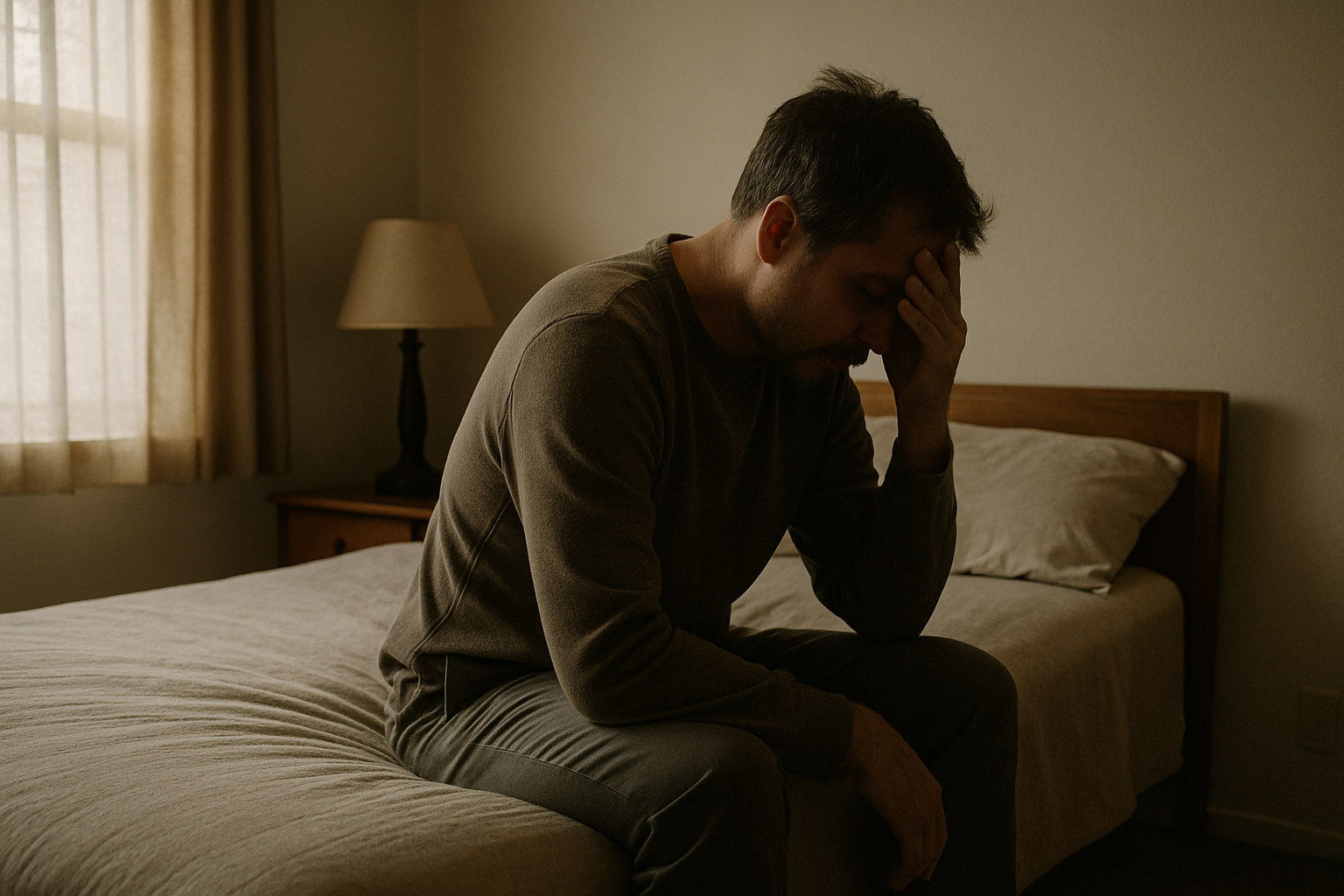
You may be juggling paperwork, bad sleep, money strain, school pickups, awkward handoffs, and a body that suddenly feels harder to trust. You searched this because the question is practical: can the strain around divorce show up physically, and what should you do this week if it does?
Skip ahead:
- When your body starts acting up after the split
- Four body changes worth taking seriously this week
- Divorce stress versus a health problem: when not to assume it is “just stress”
- The 72-hour reset that helps when life is chaotic
- Mornings, energy, and why a smaller plan usually works better
- The three metrics worth tracking for seven days
- Support over self-reliance: who to contact when your body and life are both overloaded
- Where most plans fall apart
- The single next step
When your body starts acting up after the split
Yes, a major rupture can show up in your body. Around a divorce, people often notice headaches, stomach trouble, poor sleep, muscle tension, appetite changes, getting run down more easily, and exhaustion that feels out of proportion to the day. That doesn’t prove every symptom is caused by stress, and this article isn’t diagnosing anything. It does mean that when life is under heavy strain, sleep gets disrupted, routines fall apart, meals become irregular, and your energy drops enough that ordinary illnesses and aches feel harder to shake. The longer version of this argument is in Back Pain, Stress, and Starting Over.
Your body may also be carrying a lot of practical disruption at once. If you’re up late answering emails from a lawyer, waking early with your mind racing, forgetting lunch, drinking more coffee than usual, and trying to function through conflict, you have less room to recover. That can leave you feeling shaky, foggy, tense, or worn down.
Some advice in this area overstates stress as if it explains everything; that assumption deserves some pushback. Stress can be part of the picture without being the whole picture.
New, severe, or worrying symptoms deserve medical attention.
Four body changes worth taking seriously this week
Sleep has been broken for several nights in a row
If you’ve had three or more nights in one week where you spent hours awake, kept waking up, or got far less rest than you need to function, treat that as a this-week problem. The CDC recommends 7 or more hours of sleep for adults ages 18 to 60. You don’t need to wait until you’re completely depleted to respond. Poor sleep spills into driving, concentration, work mistakes, patience with children, and your ability to keep up with the basics.
What to do this week: pick one bedtime you can actually keep for the next three nights and get in bed at that time even if sleep is patchy. If your evenings drift because of admin or doom-scrolling, set an alarm 30 minutes before bed as your stop point. On an iPhone, the Sleep schedule in the Health app is a perfectly reasonable way to do this. This often falls apart when bedtime turns into catch-up time for paperwork or emotional processing. That’s understandable, but it usually costs you the next day.
Eating, drinking, or digestion has shifted enough to affect your day
If you’re forgetting meals, living on snacks that don’t hold you for long, barely drinking water until late afternoon, or dealing with stomach upset that keeps disrupting work or errands, act now. Keep the threshold simple: if food, fluids, or digestion interfere with your ability to get through a normal day for two or three days in a row, that’s reason enough to step in. That trade-off gets a closer look in Grief, Burnout, and the Fog of Starting Over. (Related follow-up: When Your Body Is Keeping Score of a Hard Year.)
Start small and literal. Put a glass or bottle of water where you first sit down in the morning. Aim for three real eating moments a day, even if one is a substantial snack instead of a full meal. Cheap options can work fine: bananas, oats, eggs, peanut butter, yogurt, canned soup, microwave rice, rotisserie chicken, beans, whole-grain toast, trail mix. Convenience-store versions count too if that’s what today allows: string cheese, nuts, jerky, fruit cup, hummus with crackers. People often get stuck trying to make meals perfect when what they need is reliable fuel.
Tension, headaches, or fatigue are interfering with work or basic tasks
If you’re struggling to finish normal tasks because your head hurts, your shoulders and jaw stay clenched all day, or you feel too drained to do basic admin, take that seriously instead of trying to push through it. Keep the threshold practical: if it’s affecting your work, driving, parenting, focus, or ability to do ordinary chores more than once this week, pay attention now.
A useful first move isn’t a total life overhaul. It’s cutting extra strain for 72 hours. Drop optional commitments where you can. Push one errand back a day. Eat before the headache gets worse, not after. Go to bed earlier than seems necessary. If symptoms are new, intense, getting worse, or scaring you, get medical advice instead of assuming they’ll pass.
You are “pushing through” by skipping meals, skipping rest, or leaning on alcohol at night
If the only way the week works is by white-knuckling through the day and relying on alcohol to get through the evening, take that seriously now. What matters is whether your basic functioning is being held up by habits that leave you more depleted the next day.
Sometimes the laundry still develops opinions.
If this is happening more than once or twice in a week, pause and be honest about it with one trusted person or one qualified professional. If alcohol or another substance is becoming part of how you get through the nights and you want support finding treatment options, SAMHSA’s National Helpline is 1-800-662-HELP (4357), available 24/7/365 in English and Spanish. If you feel unsafe or unable to cope in real time, contact 988 or use 988lifeline.org for immediate crisis support.
Divorce stress versus a health problem: when not to assume it is “just stress”
A simple rule helps: if a symptom is new, intense, keeps getting worse, or is scaring you, get it checked instead of explaining it away. People often wait because they don’t want one more problem on top of legal forms, bills, and schedule changes. Fear about cost is real too. Waiting can turn a fixable problem into a harder, more expensive one.
Get prompt medical advice for chest pain, trouble breathing, fainting, signs of dehydration that aren’t improving, severe pain, vomiting that won’t stop, blood where you don’t expect it, a high fever that leaves you struggling to function, or any sudden change that feels alarming. You don’t need this article’s permission if your gut says something is off.
Low-cost first steps depend on where you live and what coverage you have. Primary care is often the best fit if you already have a doctor and can get in soon. Urgent care may be faster for a same-day problem, though cost varies a lot by insurance and location. Telehealth can save time if leaving home is hard, and some insurers offer nurse lines at no extra charge. If you don’t have insurance or your coverage is thin, HRSA health centers offer primary care on a sliding fee scale based on ability to pay. You can look up nearby options at findahealthcenter.hrsa.gov. No one is denied required care because they can’t pay.
The 72-hour reset that helps when life is chaotic
When everything feels messy, pick just three basics for 72 hours: fluids, regular food, and sleep opportunity. Keep the bar low enough that you can clear it on a bad day.
For three days, drink water with each meal. Eat something with protein and fiber three times a day. Get in bed at the same time each night, even if your sleep is uneven. That might be eggs and toast at breakfast, beans and rice at lunch, soup and crackers with cheese at dinner. Or Greek yogurt and a banana in the car before school drop-off if that’s all you can manage.
Keep it cheap. Oats, eggs, pasta, frozen vegetables, peanut butter, canned tuna, lentils, tortillas, apples, and store-brand yogurt usually go further than takeout and ask less of you than cooking from scratch every night. A rotisserie chicken can cover more than one meal if your budget allows. The point isn’t clean eating or “doing wellness right”. It’s easing some pressure in an already stretched week so your body has fewer reasons to struggle.
Don’t expect this to fix your mood or solve the divorce.
Mornings, energy, and why a smaller plan usually works better
Big recovery plans often fall apart after a split because your bandwidth is already tied up elsewhere. You may be making dozens of extra decisions each day about housing, childcare, forms, money, passwords, calendars, and how much contact to have with your ex. Add poor sleep and emotional spillover, and even basic choices can take more effort than they used to.
That’s why a minimum viable routine usually works better than trying to get your life together all at once. A small plan might look like this: wake up, drink water, eat something within an hour of getting up, handle only the top two admin tasks before noon if possible, and stop screens at a set time before bed.
The better recommendation is to keep this routine almost boringly small for at least a week; most ambitious reset plans collapse by day three because they ask too much from people who are already stretched thin.
Recovery after a rupture is uneven. Some mornings will go better than others. The goal this week is steadier footing, not perfect discipline.
The three metrics worth tracking for seven days
If you can spare under two minutes a day, track only three things for one week on paper or in your phone notes app: hours in bed, number of actual meals or substantial snacks eaten, and your energy level from 1 to 5 at the same time each day.
Hours in bed is easier to record than sleep quality, especially when nights are messy. Meals or substantial snacks can show whether low energy is getting worse because you’re underfed without noticing. A simple 1-to-5 energy score gives you a rough trend without asking you to analyze your whole inner life.
This is more useful than vague self-monitoring when you’re overloaded because it turns “I feel awful” into something clearer: maybe you were in bed only five hours for four nights, had one real meal yesterday, or notice your energy drops every afternoon after coffee and no lunch.
Those patterns give you something concrete to act on.
Tracking usually falls apart when you add too many categories, miss a day and quit, or use the notes to judge yourself. Missed entries are fine. Just pick it back up the next day.
Support over self-reliance: who to contact when your body and life are both overloaded
You need fewer heroic solo efforts and more targeted support. Start with one practical person who can help with logistics for one specific hour: a childcare swap, school pickup, grocery run, meal drop-off, dog walk, or sitting beside you while you sort paperwork. Keep the ask narrow so it’s easier for someone to say yes.
A text can be plain: “Could you take school pickup Thursday from 3 to 4?” Or: “Can you come over Sunday from 2 to 3 while I deal with paperwork?” Or: “Would you be able to drop off bread4?” Or: “Can you come over Sunday from 2 to 3 while I deal with paperwork?” Or: “Would you be able to drop off bread0?” Or: “Can you come over Sunday from 2 to 3 while I deal with paperwork?” Or: “Would you be able to drop off bread0?” Or: “Can you come over Sunday from 2 to 3 while I deal with paperwork?” Or: “Would you be able to drop off bread [error] eggs [error] fruit this evening? I’ll pay you back.” Ten-minute calls count too if what you need most is help deciding which form or appointment comes first.
Also line up one qualified professional if physical symptoms are ongoing or worrying. One appointment may give you clearer next steps than another week of guessing. If uncertainty about legal or financial issues is driving the spiral, like support payments4?” Or: “Can you come over Sunday from 2 to 3 while I deal with paperwork?” Or: “Would you be able to drop off bread0?” Or: “Can you come over Sunday from 2 to 3 while I deal with paperwork?” Or: “Would you be able to drop off bread housing deadlines0?” Or: “Can you come over Sunday from 2 to 3 while I deal with paperwork?” Or: “Would you be able to drop off bread account access0?” Or: “Can you come over Sunday from 2 to 3 while I deal with paperwork?” Or: “Would you be able to drop off bread this evening? I’ll pay you back.” contact one lawyer’s office4?” Or: “Can you come over Sunday from 2 to 3 while I deal with paperwork?” Or: “Would you be able to drop off bread mediator0?” Or: “Can you come over Sunday from 2 to 3 while I deal with paperwork?” Or: “Would you be able to drop off bread financial counselor0?” Or: “Can you come over Sunday from 2 to 3 while I deal with paperwork?” Or: “Would you be able to drop off bread HR contact0?” Or employee assistance program and ask for one focused conversation rather than trying to solve everything alone.
If you feel unsafe or unable to cope in real time4?” Or: “Can you come over Sunday from 2 to 3 while I deal with paperwork?” Or: “Would you be able to drop off bread immediate support0?” Or: “Can you come over Sunday from 2 to 3 while I deal with paperwork?” Or: “Would you be able to drop off bread In the US0?” Or: “Can you come over Sunday from 2 to 3 while I deal with paperwork?” Or: “Would you be able to drop off bread 988 offers free crisis support 24/7 by phone and text at 9884?” Or: “Can you come over Sunday from 2 to 3 while I deal with paperwork?” Or: “Would you be able to drop off bread through chat at 988lifeline.org. Crisis Text Line also offers free confidential support by texting HOME to 741741.
Where most plans fall apart
Most plans break because they try to tackle health concerns4?” Or: “Can you come over Sunday from 2 to 3 while I deal with paperwork?” Or grief4?” Or housing problems0?” Or finances4?” Or co-parenting friction4?” Or sleep loss4?” Or work performance in the same week. That load would flatten most people. Expensive solutions can also pull attention from basics: supplements before meals are regular again4?” Or delivery wellness products before water intake improves4?” Or boutique services before one medical check-in gets booked.
Another common trap is waiting for motivation. After a rupture4?” Or it often arrives late4?” Or if it arrives at all. Your plan has to hold up on low-energy days or it won’t hold up much at all. Then there’s the mental whiplash of one decent day followed by the expectation that you should be over it by now. Getting through today doesn’t erase yesterday’s strain.
This happens a lot because divorce scrambles logistics and identity at the same time. You’re dealing with paperwork in one hand and trying to keep your body steady with the other. There’s a practical example of this in Healthy Habits When Your Life Just Blew Up.
The single next step
Choose the more urgent one today: if symptoms are new, worsening4?” Or intense4?” Or worrying you4?” book one medical check-in now; if logistics are crushing sleep and meals first4?” Or send one text asking one person for one concrete hour of help before the day ends.
Quick answers to common questions
Can stress after a divorce actually make you feel physically sick?
Yes, it can. Stress can show up in your body as headaches, stomach trouble, muscle tension, trouble sleeping, low appetite, or getting sick more often because your system is worn down.
Why does divorce stress hit the body so hard?
Your body reads ongoing emotional strain like a threat, so it stays on high alert instead of settling down. That can affect sleep, digestion, energy, and even how well you fight off colds. When it drags on for weeks or months, the physical side of stress can get a lot louder.
How can I tell if it's stress or something I should get checked out?
If symptoms are new, intense, keep coming back, or interfere with daily life, get checked out. Chest pain, trouble breathing, severe dizziness, dehydration, or thoughts of harming yourself need urgent help. Even if it is stress, a doctor can help rule out other causes and suggest ways to feel better.
What can help when divorce stress is making me feel run down?
Start small: eat regularly, drink water, get outside, and protect your sleep as much as you can. Talking to a therapist, leaning on one steady friend, and cutting back on alcohol can make a real difference. You don't have to fix everything at once.