
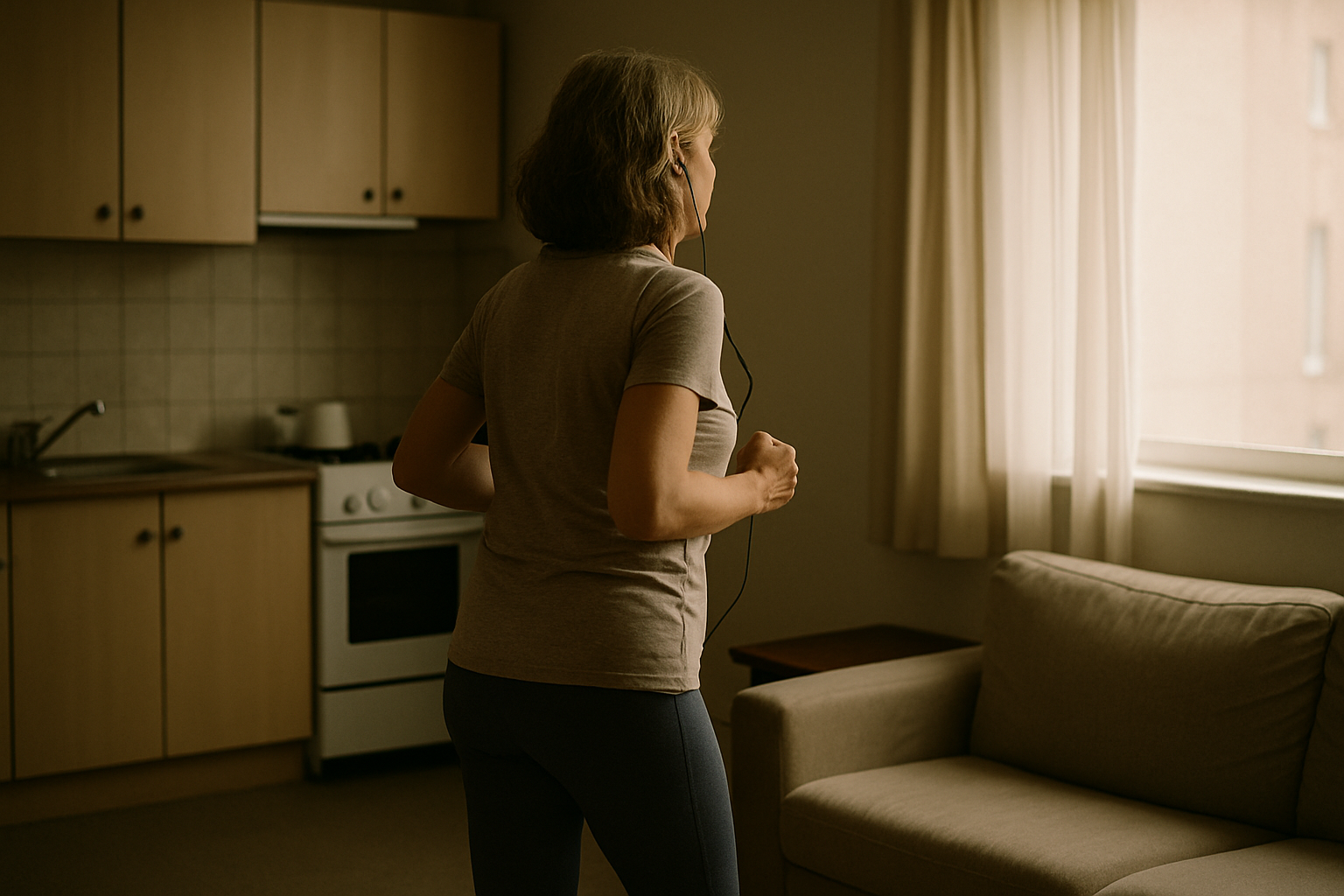
You’re 45, the savings cushion isn’t there, and “healthy habits” can sound like they were written for someone with an Instacart order, a calm schedule, and extra cash. Right now, you need habits that lower friction, protect your energy, and stop small problems from turning into expensive ones.
Skip ahead:
- What “good enough” looks like this week
- The 4 basics to handle before any upgrades
- Mornings, energy, and the 15-minute reset
- Cheap food beats “health food” more often than people want to hear
- Where most plans break down
- What health upkeep looks like when cash is short
- The 3 metrics worth tracking for two weeks
What “good enough” looks like this week
At this stage of life, health doesn’t need to look polished. It needs to help you function. A useful target for this week is stability: eating often enough to avoid a crash, sleeping on a schedule that helps you show up, moving enough to stay mobile, and keeping basic admin from turning into a bigger mess.
This article sticks to low-cost basics that still work when life feels uneven. You may miss a day. You may have one rough night and eat two meals out of a wrapper. That’s still a plan.
Rebuilding rarely moves in a straight line, and one missed step doesn’t wipe out the rest.
The 4 basics to handle before any upgrades
Your action this week: pick 3 low-cost meals and repeat them for 5 days. Keep them simple enough to make when you’re tired. (Update: How to Eat Better With No Savings and No Time goes deeper on this.)
- Oats with peanut butter and a banana
- Eggs with toast and frozen vegetables
- Rice and beans with salsa or canned fish if it fits your budget
- Yogurt with oats or fruit
A modest grocery reset built around oats, eggs, rice, beans, frozen vegetables, yogurt, peanut butter, and a few pieces of fruit can carry a lot of the week. Prices vary by store and region, so start with the cheapest staples you already know you’ll eat.
A common mistake is buying “healthy” ingredients for ambitious meals, then ending up with takeout because prep feels too big after a long day. Repetition helps. The stronger recommendation here is blunt: most tired-week meal plans should be almost boring. If a meal takes more than 10 to 15 minutes or leaves three pans in the sink, it’s probably too complicated for this week.
Pick one wake time and keep it within 30 minutes for 6 of 7 days. Start there. A perfect bedtime routine can wait.
Add one power-down cue 30 minutes before bed: lower the lights, move your phone off the pillow, or put tomorrow’s clothes out. Time cost: about 10 minutes at night. Cost: $0 if you use what’s already at home.
The CDC recommends 7 or more hours of sleep for adults aged 18 to 60. If evenings are stressful or unpredictable, trying to overhaul the whole night at once can backfire. One wake time is simpler, and it gives your day an anchor even when the rest feels unsettled.
This week, take a 10-minute walk after one meal, 5 days. If the weather is bad, march indoors, walk a hallway, or use stairs. Then add a 5-minute mobility block 3 times this week: sit-to-stands from a chair, wall push-ups, calf raises, shoulder rolls.
Time cost: 10 to 15 minutes. Cost: free.
The federal physical activity guidelines say adults should aim for 150 minutes of moderate activity per week, plus muscle-strengthening on 2 days, and those minutes can be split into small chunks. That’s why the 10-minute walk and 5-minute mobility block count here. You’re building tolerance for ordinary life: stairs, carrying groceries, standing longer, walking farther.
A common failure point is starting with workouts that are too intense. That can leave you sore, frustrated, or reluctant to do it again tomorrow.
Fill one bottle or large glass in the morning and finish it by lunch. Set a caffeine cutoff 8 hours before bed. If alcohol is part of your week, choose 2 alcohol-free nights rather than making a sweeping rule you probably won’t keep under stress.
This costs little or nothing. The main problem is trying to remove every comfort at once during a hard stretch. The writer’s view is that full “clean slate” resets are overrated here; a couple of steady limits beat an all-or-nothing pledge most weeks.
Mornings, energy, and the 15-minute reset
A bare-minimum morning sequence
Try this order: wake up, bathroom, drink water, open the curtains or step outside for a minute, get dressed, eat something simple. Oats. Toast and eggs. Yogurt. A banana with peanut butter.
If you’re rushed, it can take 15 minutes. If you move slower, 25 minutes. Fewer decisions early on means less friction before the day starts asking things from you.
When mornings go sideways
Create a backup version that takes 5 minutes: water, daylight, shoes on, grab toast or a banana. Write it on a sticky note if that helps. A later piece, Healthy Habits When You Are Starting Over at 50, gets into the practical side of this.
Protect the first five minutes and the rest of the morning gets easier.
One bad morning doesn’t ruin the day.
The trap is treating a missed routine like proof the whole day is gone. A 5-minute backup plan gives you somewhere to land when sleep was poor, paperwork ran late, or you woke up heavy with worry.
Cheap food beats “health food” more often than people want to hear
When money is scarce, boring food works because you’ll actually eat it. A bag of oats does more for you than an expensive powder that sits in the cupboard. Eggs, beans, rice, frozen vegetables, yogurt, peanut butter, canned soup with added beans, toast with tuna, microwaved potatoes with cottage cheese or eggs—these are regular foods that cover a lot of ground without branding, trend language, or specialty packaging.
A good working rule is simple: try to have one protein source and one produce item in two meals a day. That might be eggs and frozen spinach at breakfast, yogurt and fruit at lunch, or rice and beans with salsa at dinner. Aim for meals that are easy to buy, easy to store, and easy to repeat on low-energy days.
This tends to go wrong at the store. Shopping while hungry, upset, or without a short list makes it easier to come home with random items that don’t turn into actual meals. For one week, bring a list with no more than 10 items, built around meals you already picked.
Where most plans break down
The fresh-start trap
The urge to fix everything by Monday is strong when life feels shaky. New groceries, new planner, strict bedtime, hard workout plan, no treats, early wake-ups. It looks responsible for about 48 hours. If that’s the boat you’re in, Healthy Habits When Your Life Just Blew Up is worth ten minutes.
Cap your changes at 3 this week. For example: a fixed wake time, three repeat meals, and ten-minute walks. That’s enough.
The hidden time costs
Laundry eats time. So does commuting, caregiving, forms, pharmacy pickups, cleaning up after meals, chasing documents, and waiting on hold. Before you build a routine, write down where 30 minutes actually goes for 3 days. You may find the issue isn’t motivation. Getting More Done With No Savings and Too Much Stress revisits this with fresher detail.
Your hours are already spoken for.
Shame spending and convenience spending
Skipped groceries can turn into expensive convenience food fast. Keep 2 emergency foods at home for low-energy days: instant oats and eggs, canned soup and bread, peanut butter and crackers, frozen burritos if they fit your budget better than takeout. (We unpack that separately in Burnout Recovery Meals on a Tight Budget.)
Treat emergency food as planning, not failure. It’s there for nights when cooking isn’t realistic.
What health upkeep looks like when cash is short
The appointments worth locating before you need them
Spend 20 minutes this week saving 3 phone numbers and 1 address in your phone: a community clinic, a low-cost dental option, a nearby pharmacy, urgent care, your local health department, or an employee assistance contact if you have one through work.
If you’re in the U.S., HRSA-funded community health centers offer primary care and dental care on a sliding fee scale based on ability to pay. The locator is findahealthcenter.hrsa.gov. Having it saved ahead of time can cut stress when something small needs attention before it gets bigger or more expensive.
Prescriptions, checkups, and bills: practical admin
Set refill reminders in your phone calendar. Ask about generic pricing where relevant. If you get a medical bill you don’t understand, call and ask for an itemized statement or payment plan options. If paperwork has piled up, give it 15 minutes twice this week, not an imaginary full afternoon that never shows up.
If things feel heavy or you feel at risk of harming yourself, reach out for real support right away. In the U.S., call or text 988, or chat at 988lifeline.org. You can also text HOME to 741741 for Crisis Text Line. If you need help finding mental health or substance use treatment support in the U.S., SAMHSA’s National Helpline is 1-800-662-HELP (4357). Free support is there 24/7. (See also: Starting Over at 45 Without Losing Yourself)
The 3 metrics worth tracking for two weeks
Wake time
Track whether it stayed within your 30-minute window. A check mark is enough.
Meals eaten before 3 p.m.
Count whether you had at least one real meal before 3 p.m., not just coffee.
Minutes you moved on purpose
Count any walking, stairs, or even five minutes of chair stands and wall push-ups. Keep it visible on paper or in your notes app. The paper version is often better than an app for two weeks because it stays in sight and asks less of you.
Tonight, pick your 3 repeat meals for the next 5 days and write the grocery list before bed.