
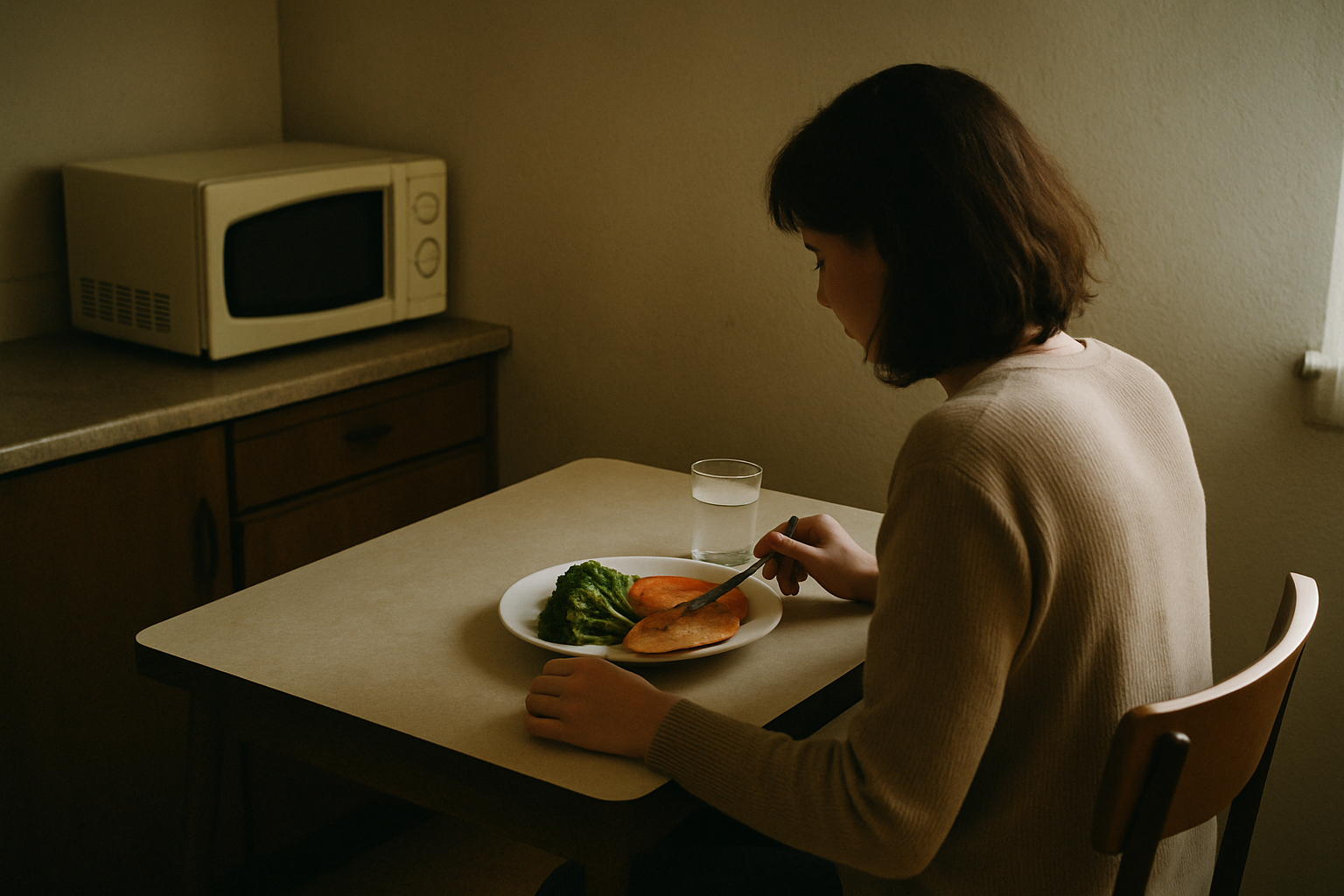
The house is quieter, meals can feel strangely difficult, and cooking for one after a divorce can feel like one more choice when you’re already carrying too much. Your appetite may be off, money may be tighter, and the old routine may have fallen apart. The goal this week is simple: food that’s decent, doable, and regular.
Skip ahead:
- What “eating better” looks like when you are feeding one tired person
- The first 20-minute reset: enough food for the next three days
- Three repeatable meals beat seven ambitious ones
- Where most solo-food plans fall apart
- Your fridge vs your freezer: when each one saves you
- A £30 / $40 grocery week that is plain, decent, and enough
- Evenings, loneliness, and the takeaway trap
- Two tiny systems that make eating happen on hard days
What “eating better” looks like when you are feeding one tired person
For now, eating better means eating more steadily. It means keeping food in the house you’ll actually eat, eating at roughly regular times, and cutting down the expensive, draining choices that show up when you’re hungry.
If three meals a day feels unrealistic this week, aim for two meals a day plus one backup option. That backup could be toast with peanut butter, a bowl of soup, a pot of yogurt, or a microwave rice pouch with soy sauce and frozen peas. That lower bar matters. Missed meals often end in a late-evening crash, an overpriced delivery order, or a fridge full of food you don’t want anymore.
Cooking from scratch every night isn’t the standard here. Repeating the same breakfast four times is fine. Buying a bagged salad from Aldi, Tesco, Trader Joe’s, or Walmart is fine. Keeping frozen veg instead of fresh broccoli is fine. Better, in this season, means less chaos.
The first 20-minute reset: enough food for the next three days
Do a five-minute kitchen check
Set a timer for five minutes. Open the fridge, freezer, and one cupboard. Look for only three categories:
- Quick protein: eggs, yogurt, cheese, beans, tuna, rotisserie chicken, tofu
- Easy carbs: bread, wraps, oats, rice pouches, pasta, potatoes
- Something produce-based: frozen vegetables, fruit, salad kit, baby carrots, jarred tomatoes
Throw out only what’s clearly gone off. Don’t turn this into a deep clean. A lot of solo food plans fall apart because the “quick check” turns into an hour of wiping shelves and feeling bad.
Buy a short emergency list
Keep your list to 10 items maximum. Decision fatigue is real, especially under bright supermarket lights when you’re trying to remember what used to be normal.
A basic three-day list might be:
- Eggs
- Yogurt
- Bread or wraps
- Microwave rice
- Soup
- Frozen vegetables
- Rotisserie chicken or tinned beans
- Fruit
- Pasta
- Jar sauce
Rough cost: about $25-$45 / £20-£35, depending on the store and what you already have. Lidl and Aldi will usually keep it lower. Marks & Spencer or Whole Foods probably won’t.
Set up three default meals
Pick three meals you can repeat for one week. Repetition helps.
- Meal 1: yogurt plus fruit
- Meal 2: soup plus bread or toast
- Meal 3: pasta with jar sauce and frozen veg
All three take under 10 minutes if the kitchen is basically functional. If you’ve got a bit more energy, swap in eggs on toast, a wrap with chicken and lettuce, or rice with beans and salsa. The point is simple: by tomorrow evening, you already know what dinner is.
Three repeatable meals beat seven ambitious ones
Breakfasts that require almost no thought
- Toast plus eggs: 5 minutes, about $1-$3 / £1-£2.50 per serving
- Yogurt plus fruit: 2 minutes, about $1-$3 / £1-£2.50
- Oatmeal plus peanut butter: 3-5 minutes, about $1-$2 / under £2
If mornings are messy, choose one breakfast and repeat it for five days. Keep the ingredients visible: bread in the bread bin, eggs on the front shelf, bowl where you can reach it. Tiny frictions matter more than recipes when you live alone.
Lunches that survive a low-energy day
- Soup and bread: 5 minutes, about $2-$4 / £1.50-£3.50
- Wrap with chicken or beans: 5-10 minutes, about $2-$5 / £2-£4
- Rice with frozen veg and soy sauce: 5-7 minutes, about $2-$4 / £1.50-£3.50
If lunch is where your day goes off track, buy soup you can heat straight from the carton. Heinz tomato soup, lentil soup from the chilled aisle, or a simple chicken soup all count. You don’t need to prove anything at lunch.
Dinners with one pan, one bowl, or one container
- Pasta with jar sauce and spinach: 10-15 minutes, about $3-$5 / £2-£4
- Baked potato with beans and cheese: 10 minutes in the microwave or longer in the oven, about $2-$4 / £1.50-£3.50
- Rotisserie chicken with microwave rice and salad: 5-10 minutes, about $4-$6 / £3-£5 per serving depending on how many meals the chicken covers
A concrete example: it’s 7:15 p.m., you’ve just got in, and the kitchen feels irritating before you’ve touched anything. Put a potato in the microwave for 8 minutes, heat half a tin of Heinz baked beans in a bowl for 2 minutes, add grated cheddar if you have it. That’s dinner in under 10 minutes, with barely any washing up.
Where most solo-food plans fall apart
A lot of people buy “healthy” ingredients with no plan to use them. They come home with spinach, peppers, herbs, maybe a nice bit of salmon, then spend the next two evenings too tired or too flat to chop any of it. By Friday the spinach is wet in the bag, the herbs are limp, and the whole thing feels like proof they’ve failed at something basic. Really, the plan failed.
The tradeoff is dull food now or wasted food later.
Another common problem is cooking as if there are still three or four people to feed. A family-size pasta bake sounds sensible until you’ve eaten it twice and can’t bear another portion. Then there’s the evening problem. Plenty of people have good intentions at 10 a.m.; far fewer want to chiffonade basil at 7 p.m. when loneliness, resentment, and decision fatigue hit hardest.
The smarter recommendation is to shop for three days at a time unless solo cooking already feels easy and stable.
Shop for the version of you who needs an 8-minute potato, 2-minute beans, or rotisserie chicken with microwave rice and salad. Conventional advice often praises meal prep as the answer to everything; that advice gets too much credit here. In this writer’s opinion, a small repeatable system beats a heroic Sunday cook-up when life already feels wobbly.
Takeaway can also turn into a full-week slide because one delivery meal creates a strange sense that the week’s already gone. It hasn’t. One burger from Deliveroo or DoorDash means you ate one meal someone else cooked. The fix is practical: shop small and often. A three-day shop is usually more realistic than a big “fresh start” trolley.
Your fridge vs your freezer: when each one saves you
Fridge foods for the next 48 hours
The fridge is for food you mean to use soon. Good options are salad kits, cooked chicken, berries, milk, hummus, sliced cheese, yogurt, and pre-cut veg. They help right after shopping because there’s less standing between hunger and eating.
If you buy fridge food without a plan for the next 48 hours, waste climbs fast when you live alone.
Pair each item with a use: hummus for wraps and carrots; cooked chicken for two lunches and one dinner; berries for breakfast today and tomorrow.
Freezer foods for the days that go sideways
The freezer is backup. Frozen vegetables, frozen fruit, bread, single portions of leftovers, dumplings, fish fillets if you eat them, even grated cheese all earn their place because they wait for you without turning into guilt.
This matters more than people admit. Freezer food cuts waste, and it softens that defeated feeling of opening the fridge and finding nothing usable except food that now needs rescuing.
The “portion once” rule
The day you bring food home or the day you cook it, freeze one or two single servings. It takes about five extra minutes. Use takeaway tubs, zip bags, or IKEA food containers if you have them.
If you buy a loaf of bread and know you won’t finish it quickly, freeze half right away. If you cook pasta sauce, freeze one portion before dinner. This interrupts the familiar pattern of “I’ll eat it later,” followed by “I forgot,” followed by throwing money in the bin.
A £30 / grocery week that is plain, decent, and enough
The basket
A low-cost week might include:
- Oats
- Eggs
- Bread
- Pasta
- Rice
- Tinned beans
- Frozen vegetables
- Bananas
- Apples
- Yogurt
- Cheese
- Soup
- Peanut butter
- Jar sauce
Brands and prices will vary by region and store. This list works because the ingredients overlap, and most of them keep well.
What that basket turns into
- Porridge with banana and peanut butter
- Toast with eggs
- Yogurt with chopped apple
- Soup with bread
- Rice with beans and frozen veg
- Pasta with jar sauce and cheese
- Baked beans on toast if that’s your thing
- An apple or banana with peanut butter as a snack or fallback meal add-on
On paper, that basket can look plain. Plain helps when life already feels overloaded. The ingredients earn their place because they show up again and again: porridge with banana and peanut butter, rice with beans and frozen veg, pasta with jar sauce and cheese, soup with bread.
When a little more money is worth it
If your budget can stretch by another $3-$10 / £3-£8 total, a few convenience upgrades can make a real difference: pre-washed greens, rotisserie chicken, chopped frozen onions, microwave rice pouches, grated cheese instead of a block if grating feels like one task too many.
You’re paying to save effort. Sometimes that’s money well spent.
Evenings, loneliness, and the takeaway trap
Some nights, the problem isn’t knowing what to eat. It’s not wanting to sit alone and make yourself dinner in a house that feels different now. That’s ordinary human pain. Food gets tangled up in it because meals used to mark time with someone else there.
If takeaway happens, treat it as one meal. Don’t turn it into a verdict on your week or on how well you’re looking after yourself. The most useful question the next morning is simple: what’s my first meal today? Then make it easy to answer with something already in the house, like toast and eggs, yogurt and fruit, or soup and bread.
If meals are getting hard because things feel heavy beyond food itself, real support can help more than any meal plan. A qualified professional or a trusted local support service is the right place for that conversation. For everyday structure, simpler support can help too: ask one friend to be your Tuesday text check-in so somebody asks “have you eaten?”, or plan one shared meal each week, whether that’s takeaway on FaceTime, lunch with a sibling, or Thursday pasta at a neighbour’s table.
Two tiny systems that make eating happen on hard days
The “eat before 2 p.m.” rule
Pick one simple meal and eat it before mid-afternoon, even if the rest of the day is patchy. Toast and eggs. Yogurt and fruit. Soup and bread. The point is to stop the day drifting by on coffee, stress, and nothing substantial.
This rule usually falls apart when it stays too vague. Don’t say “I’ll have something later.” Decide now whether “something” means toast and eggs, yogurt and fruit, or soup and bread.
The “always two backups” rule
Keep two backup meals in the house at all times. Good options are tinned soup and bread in the freezer; microwave rice and beans; frozen dumplings; pasta and jar sauce; crackers and cheese with fruit.
You’re building a small safety net for days when shopping doesn’t happen, appetite is strange, or everything feels harder than usual. If there’s nothing easy to fall back on, it’s much easier to end up ordering takeaway or skipping meals altogether.
This week, write down your three default meals and buy the ingredients for them on your next shop.
Questions people ask
How can I motivate myself to cook when it's just me now?
Make it as easy as possible at first: pick 2 or 3 simple meals you actually like, keep the ingredients on hand, and cook enough for leftovers so you're not starting from scratch every night. It also helps to tie dinner to a small routine, like cooking right after a walk or while listening to a favorite podcast. You're not trying to become a perfect home cook overnight—you just need a few decent meals that keep you fed and feeling steadier.
What should I buy at the grocery store so I eat better and waste less food?
Start with a short list: a couple of proteins, a few fruits, a few vegetables, one grain or starch, and easy basics like yogurt, eggs, nuts, or soup.
How do I stop stress-eating or skipping meals after a divorce?
Eat on a loose schedule, even if your appetite is off, because waiting until you're drained usually leads to takeout, random snacking, or not eating enough. Keep quick options around like fruit, toast, canned beans, salad kits, rotisserie chicken, or frozen meals you don't hate. If evenings are the hardest, plan that time on purpose with a real meal and one comforting snack so food feels less chaotic.