
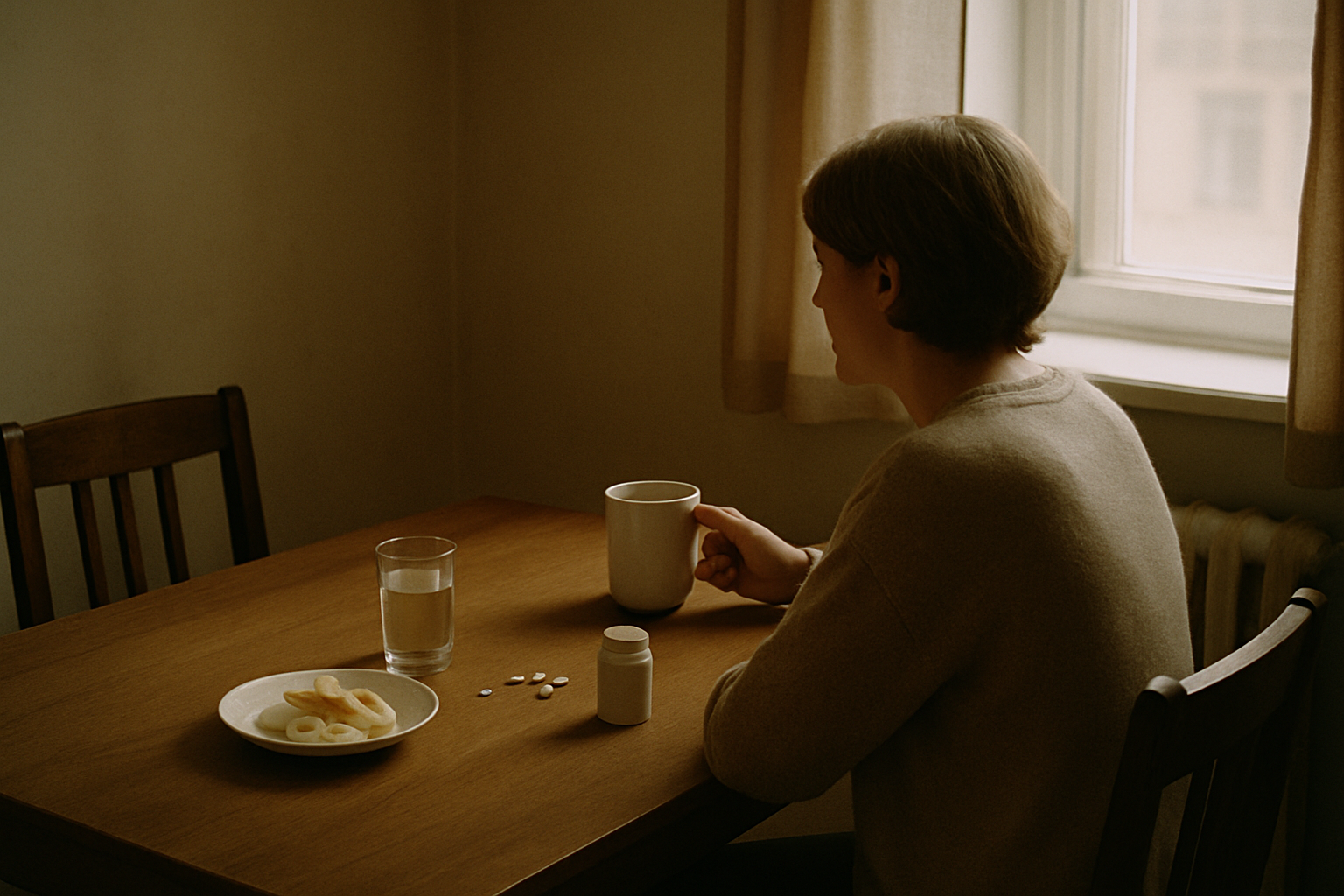
You’re not getting back to normal. You’re trying to function again after illness with less stamina, less certainty, and less room for mistakes. What helps this week is a short daily routine that protects your energy, steadies the day, and supports recovery without extra money, rare bursts of motivation, or a complete life rebuild.
Contents
- Mornings need protection, not ambition
- The five-anchor day gives you structure without demanding perfection
- Start with a minimum viable movement plan
- Most routines fail because they were built for your best day
- Track three things for seven days and ignore the rest
- Reduce friction around food, medication, and basic care
- If your routine keeps breaking by day three, make it smaller fast
Mornings need protection, not ambition
Keep your first hour simple for the next seven days. Limit it to three essentials: drink water, take medications or supplements you already use, and do one gentle body check before screens or chores. That body check can be as basic as asking: am I dizzy when I sit up, do I feel shaky, is pain higher than yesterday, and do I need food before I try to do anything else? It takes about 10 to 20 minutes and costs little or nothing if you stick with what you already have.
This works because rushing early often sets up a bigger crash later. After illness, your body can handle less input and fewer sudden demands. Email, dishes, news, and errands all count. (Healthy Habits When Your Life Just Blew Up has the full walkthrough.)
A slower first hour makes it less likely you’ll burn through your best energy before noon. A common failure point comes after a slightly better morning. You wake up thinking you’re finally turning a corner, then pack the hour with laundry, appointments, phone calls, and cleaning. By afternoon, symptoms climb, and the next day often gets worse too.
Protect that first hour even on decent days.
The five-anchor day gives you structure without demanding perfection
Wake within the same 60-minute window
Pick a wake window you can actually hit most days, such as 7:30 to 8:30 or 9:00 to 10:00. Stay within that one-hour range for at least five days out of seven. That’s more realistic than forcing an exact minute when sleep is still uneven.
A consistent range helps your body expect food, rest, and sleep at roughly the same times without turning recovery into a test you fail at 8:07.
Hit three eating points, even if meals are small
Set a minimum target of three eating points each day: breakfast within two hours of waking, one midday meal or snack, and one evening meal or snack. Keep them plain and cheap if needed. Oatmeal, yogurt, peanut butter on bread, soup, eggs, bananas, rice, frozen vegetables, crackers, rotisserie chicken, canned beans, and applesauce all work. Many of these are low-cost basics that can cover several days.
This step often falls apart because nausea, fatigue, or “I’ll eat later” turns into an energy crash. If a full meal is too much, count a snack as the eating point. A banana and yogurt counts. Crackers and soup count. The goal is regular fuel, not perfect nutrition.
Plan one rest before you think you need it
Schedule 20 to 30 minutes of lying down or sitting quietly by late morning or early afternoon. Put it on paper if that helps. Proactive rest works better than waiting for a collapse because it interrupts the slide before symptoms spike. (There’s now a fuller answer to this in Working Again After Illness.)
Recovery gets slower when every good hour is spent immediately.
If you wait until your body forces you to stop, getting over that crash often takes longer than the rest break would have. The standard idea that rest should only happen once you have earned it is wrong for illness recovery; planned rest is often the more disciplined move.
Get one small outside contact
Step outside for 5 to 10 minutes once a day. If mobility is limited, stand at the door, sit by an open window, or walk to the mailbox. Daylight and a small change in environment help orient the day. You do not need a proper outing for this to count. (More on this in Productivity After Burnout.)
Use a fixed evening shutdown
Choose a shutdown time 30 to 60 minutes before sleep. At that time, lower the lights, reduce screens if you can, and set out next-day basics: water bottle, medications, clothes, charger, and one simple breakfast item. It costs nothing if you use what you have and takes about 5 to 10 minutes.
The payoff is immediate: fewer decisions in the morning and less chance of starting the day behind.
Start with a minimum viable movement plan
Set your movement threshold at five minutes a day for one week. Walk indoors, do seated mobility work, stretch gently, stand at the counter and shift your weight, or take one lap outside. Five minutes is small enough to repeat tomorrow, and that’s what builds consistency.
In early recovery, daily movement often helps more than formal workouts. A workout can mean travel, changing clothes, setup, recovery time, and extra strain. Gentle movement keeps your joints from stiffening and gets you active again without setting off a major rebound later.
If formal exercise leaves you wiped out that day or pushes basic tasks off the table the next day, it’s too much for this week. Five minutes should be the default starting line for most people coming off illness.
Back off if you get dizzy, unusually breathless, shaky, or suddenly worse during movement. Back off if symptoms flare later that day or if you need the next day to recover from something that was supposed to help. More isn’t automatically better after illness. If you’re unsure, cut the duration in half and test that smaller amount for three days.
Most routines fail because they were built for your best day
The common mistake is building a plan around a rare good day. On paper, it looks reasonable: shower, answer messages, make lunch, walk 20 minutes, grocery shop, start laundry. In practice, that overshoots your real average capacity.
Then you hit the good-day trap. You get a burst of energy, spend all of it at once, and wake up worse the next day.
The fix is simple and effective: cut the plan until it feels easy, then repeat that exact version for seven days before you add anything. If your routine breaks by Wednesday, it’s too big. Shrink it before you judge yourself.
Shame can wreck a recovery routine too. One missed day turns into “I failed,” then three more missed days. Treat one off day as data and restart at the next anchor point: your next meal, next rest break, or next shutdown time.
Track three things for seven days and ignore the rest
Rate energy three times a day on a 0 to 5 scale
Check in morning, midday, and evening. Use a simple scale where 0 means empty and 5 means strong for your current condition. Write one number each time. It takes under a minute a day and shows patterns fast. (We unpack that separately in Burnout Recovery When You Still Have to Work.)
Track only two or three symptoms that change decisions
Pick symptoms that affect what you can do: pain, dizziness, nausea, brain fog, breathlessness, palpitations, or headache. Don’t build a giant symptom journal unless someone treating you asked for one. Too much tracking becomes its own job and can pull energy away from eating, resting, and basic tasks.
Write down what you actually did
Note your wake time, whether you hit your eating points, whether you took the planned rest, whether you did five minutes of movement, and when you went to bed. Record facts, not intentions. “Ate yogurt at 10:30” is useful. “Meant to eat earlier” isn’t. You’ll spot patterns faster than you would from memory alone.
Reduce friction around food, medication, and basic care
Put essentials in one visible zone
Create one recovery station where you spend the most time. Keep a water bottle, medications, simple snacks, charger, tissues, lip balm, notebook, pen, and other items you repeatedly go looking for there. This can cost nothing if you use a bowl, tray, shoebox, or grocery bag you already have. If you buy something small like a basket or bottle, keep it modest.
Prepare bad-day food on purpose
Set up food for the days when cooking isn’t realistic. Keep yogurt, soup, oatmeal, eggs, frozen meals, crackers, fruit, peanut butter, cheese sticks, canned beans, deli turkey, instant rice, applesauce cups, and bread for toast where you can reach them easily. Spend 15 to 30 minutes once this week putting them in one obvious spot.
Repetition helps. Eating the same five things for a week beats skipping meals because every option takes effort. A few ready items from Trader Joe’s frozen section can serve this purpose just as well as homemade food if that store is already part of your routine.
Remove one daily obstacle this week
Pick the obstacle that keeps showing up and fix that one thing. Put a chair in the shower. Move a laundry basket upstairs. Set prescription auto-refill if your pharmacy offers it. Put a small trash bag by the bed. Keep a spare phone charger where you rest most often.
Reducing effort often helps more than pushing harder, especially when energy is scarce.
If your routine keeps breaking by day three, make it smaller fast
Shrink to one morning anchor and one evening anchor
If five anchors are too much right now, cut back to two. Morning anchor: water plus medication. Evening anchor: lights down plus tomorrow’s items set out. Keep that version for three days before you add anything else.
Use if-then rules so decisions are already made
Write two or three rules on paper or in your phone notes. If I miss breakfast, then I eat a simple snack by 11:00. If I can’t walk outside, then I stand by an open window for five minutes. If I forget my planned rest, then I sit quietly for 10 minutes before my next task. These rules cut decision fatigue when your brain is tired.
Check whether the plan costs more than your current capacity
A routine can look reasonable on paper and still cost too much in real life. Count the real cost in time, money, stairs, cooking effort, transport, showering effort, social energy, childcare load, or appointment prep. A trip to CVS or Walgreens may feel simple one week and impossible the next if it means getting dressed, driving, standing in line, and then putting everything away at home. Can You Rebuild Good Habits When Life Has Blown Up expands on this point.
If the routine keeps breaking at the same point, that point is asking more of you than you can give right now. How to Rebuild Healthy Routines After an Illness revisits this with fresher detail.
Tonight, set out water, medications already prescribed to you, and one simple breakfast item in a single visible spot for tomorrow morning.