
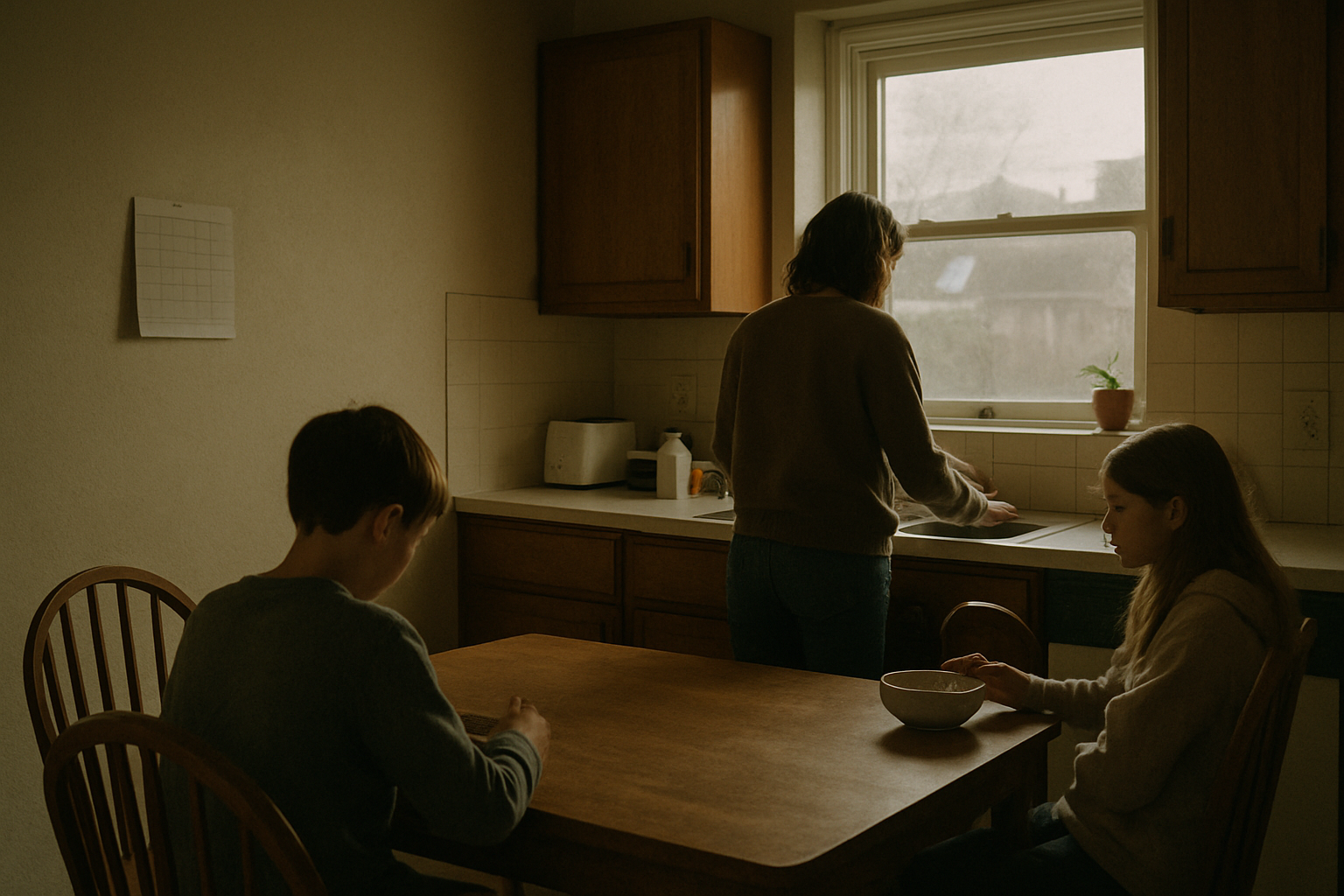
You’re trying to run one family life across two homes while school, work, custody exchanges, bills, and your own emotional fallout keep shifting the ground under you. The old routine is gone, and “just get organized” can feel useless when your week gets thrown off by pickups, sick days, money, or how your child is coping. You can rebuild a routine after divorce with kids, but the first version needs to get you through this week, not impress anyone.
In this article A later piece, A Simple Weekly Reset After Divorce, gets into the practical side of this.
- The first goal is a week that does not collapse
- The non-negotiables that deserve a fixed place first
- Two-home life gets easier when both homes use one simple system
- What a minimum viable routine really looks like in practice
- Where most routine rebuilds fall apart
- The 3 weekly check-ins worth keeping
- Money, time, and energy: the trade-offs that actually matter
The first goal is a week that does not collapse
Lower the bar first. Aim for a week where your kids know what happens next, the essentials are covered, and there are fewer last-minute scrambles. Early on, that counts as a successful routine after divorce.
Write down what has to happen each week on one page: school attendance, meals, medication, custody handoffs, laundry, one grocery run, and bill payment dates. Skip optimization for now. You don’t need the best schedule. You need one that still works when someone is tired, upset, late, or sick.
This usually falls apart because people try to rebuild the old family system too quickly. They plan as if they still have the same help, energy, money, and emotional bandwidth. Then one bad handoff or one rough school morning knocks everything over.
Build for your current capacity, even if it looks plain. The common advice to “keep life as normal as possible” gets overstated in this stage; in this writer’s opinion, forcing the old normal too soon usually creates more stress than stability.
The non-negotiables that deserve a fixed place first
Anchor sleep, school, and handoff times
Set four anchors before you organize anything else: wake time, bedtime window, school departure time, and custody exchange time. Keep wake and sleep within about 30 minutes on most days, including weekends if you can manage it. Spend 20 to 30 minutes putting those anchors on one weekly page or in one phone note.
It works because children settle faster when the basic rhythm stays predictable, and adults make fewer decisions when the fixed points are already set. If bedtime swings wildly depending on whose house they’re in or how stressed everyone feels, the next day gets harder fast. For a deeper look at that side of it, see Healthy Habits When Your….
Food, meds, bags, and paperwork
Pick a minimum meal plan and repeat it. Use a three-dinner rotation for school nights, like tacos, pasta, and rotisserie chicken with frozen vegetables. Keep breakfast boring on purpose if that helps: cereal, toast, yogurt, or oatmeal. On custody-switch days, store-brand convenience food can be worth a few extra dollars if it prevents a drive-thru stop or a meltdown at 6 p.m.
Create one backpack launch point near the door. Put shoes, coats, lunch bags, permission slips, library books, and sports items there every night. Choose one paper spot for forms and school notices. Add a nightly 10-minute reset to refill water bottles, check meds, sign one form, and repack bags.
This breaks down when you keep too many meal options in play or stash supplies in three different rooms. Repetition is what makes the system hold under pressure.
Your own legal and admin block
Reserve one 45-minute block each week for divorce admin, school forms, bills, insurance issues, calendar updates, and messages you’ve been avoiding. Put it on the same day each week if you can. If evenings are chaotic, use a lunch break or the first 45 minutes after school drop-off.
It works because admin stops spilling into every evening. You cut down the constant mental drip of “I still need to deal with that,” which matters when your brain is already carrying too much. Best Daily Routine After Divorce revisits this with fresher detail.
Two-home life gets easier when both homes use one simple system
You don’t need matching homes to create stability. You need a short list that stays consistent in both places: where school items live, how medication is handled, what bedtime expectations look like, and how handoff communication happens. A free shared calendar app can track custody dates, school events, doctor appointments, and sports schedules. Google Calendar works fine if both adults will actually use it.
Buy duplicates of the basics that keep causing friction: a phone charger, toothbrush, hairbrush, pajamas, socks, and common toiletries for each home. The one-time cost is usually modest compared with the repeated stress of forgotten items and emergency runs to Target or CVS. If your child uses medication or depends on comfort items, decide ahead of time whether those travel back and forth or stay in both homes.
Many parents get stuck here. They pour energy into negotiating every parenting detail with an ex instead of agreeing on the few things that shape the child’s actual week.
What actually needs to match?
Keep those agreements short and functional: “Homework folder always travels.” “Medication gets confirmed at handoff.” “Text by 7 p.m. if tomorrow’s pickup changes.” Small consistency beats long debates.
What a minimum viable routine really looks like in practice
The morning sequence that can survive low energy
Cut the school-morning routine to five to seven steps and keep them in the same order every day. A workable sequence looks like this: get dressed, eat breakfast, brush teeth, put on shoes, grab bag, out the door. If your child is young or distractible, post the steps on paper by the door or refrigerator.
Morning routines usually fall apart when adults add too many nice-to-have tasks: finding matching outfits, packing special snacks from scratch, cleaning bedrooms before school, answering non-urgent emails, or discussing feelings while the clock is running. Protect the order. Save the extras for later.
The after-school landing zone
Create a 20-minute arrival pattern: snack, shoes and coats in one spot, quick reconnect, then homework or downtime. Keep that first interaction simple. Ask one practical question, such as “What has to go back tomorrow?” before you move into homework battles or schedule updates. (More on this in Rebuilding Your Finances After….)
That matters because transitions often carry the day’s stress with them. A child coming home from school or from the other parent’s house may need a predictable landing more than immediate correction. For a newer take on this, see Productivity Reset After Divorce.
The evening shutdown that protects tomorrow
After the kids are in bed, do a 10- to 15-minute reset. Check tomorrow’s calendar, set out clothes, prep one meal item, charge devices, and put keys and bags in place. Use a timer if you need to keep it from turning into an hour of exhausted catch-up.
Replace doom-scrolling with that reset when you can. It’s a small trade, but it pays off fast because tomorrow morning is where the routine either holds or breaks.
Where most routine rebuilds fall apart
Overcomplicated planners are a common problem. So are custody-week expectations that ignore reality. If every day has a different plan, every exception turns into a crisis.
Routine also breaks because divorce adds grief, conflict, child behavior changes, and decision fatigue to ordinary family logistics. Even simple systems can feel hard to maintain when you’re absorbing legal stress or trying to stay calm through tense exchanges. That doesn’t mean you’re failing. It means your routine needs to cut decisions and transitions as much as possible.
Stick with one planning tool for two weeks before you change it. A paper planner works. One notes app works. A whiteboard on the fridge works. Apple Notes is usually the best default for parents who keep abandoning fancy systems because it opens fast and is already on the phone they’re carrying. Using three tools at once usually creates holes instead of clarity. Repeat what works for two weeks before you try to “improve” anything.
The 3 weekly check-ins worth keeping
A 15-minute Sunday plan
Take 15 minutes on Sunday to review the custody schedule, school events, meals, rides, appointments, and one likely problem spot. Write it on paper or keep it in one phone note. If Wednesday usually falls apart because of soccer pickup and late work calls, decide Wednesday’s fix during this check-in.
A midweek reset on the hardest day
Pick the day your week usually wobbles and put a 10-minute reset there. Reorder groceries if you need to. Confirm pickup. Move the one task that won’t get done. Text a teacher or co-parent update before confusion starts.
That quick reset can keep one shaky day from throwing off the rest of the week.
A child check-in that is short and predictable
Once or twice a week, take 5 to 10 minutes and ask three questions: What feels hard right now? What do you need for school or home this week? What would make transitions easier? Do it when your child is calm enough to answer, not during bedtime stalling or in the car three minutes before drop-off.
This falls apart when adults turn it into a deep emotional interview. Keep it short and repeatable so your child learns support is available without pressure.
Money, time, and energy: the trade-offs that actually matter
Cheap supports that buy back time
Spend small amounts on things that cut repeat friction. A whiteboard in the kitchen can hold this week’s pickups and school reminders, and it usually costs less than a takeout dinner. One laundry basket per child keeps clothing from getting mixed across rooms. Duplicate basics in each home reduce forgotten-item emergencies. On exchange days, store-brand frozen meals or bagged salad can be a smart spend when time is tight.
When paying for help is worth it
If you can afford any paid help, aim it at the bottleneck. One two-hour babysitting block can cover admin tasks or give you space to grocery shop without dragging everyone through it. Grocery delivery may come with extra fees and tips, but it can save a full errand cycle plus the impulse buys that happen when you’re exhausted. A cleaner once a month may do more for your stress than another organizing system if mess is what keeps pushing you into overwhelm.
Small paid relief often works better than broad self-improvement plans because it removes one specific pressure point right away. (More on this in How to Stay Organized….)
Where to save your energy instead
Drop low-value standards for now: elaborate meals, perfect folding, themed birthday extras, optional school extras you don’t have bandwidth for, and holiday decorating that turns into another job. Protect function first.
Lowering standards temporarily is a practical move, especially when your time and money are stretched across two households.
Pick one thing tonight: make your weekly page with wake times, school departures, handoffs, three dinners, and your 45-minute admin block.
Frequently Asked Questions
How long does it take to rebuild a routine after divorce when you have kids?
It usually takes longer than you want, and that's normal. Most families need a stretch of trial and error before mornings, school pickups, meals, and bedtime stop feeling so shaky. Start with a few anchor points your kids can count on, like the same wake-up time and bedtime, instead of trying to fix everything at once. A routine that works pretty well is better than one that looks perfect on paper.
What should I focus on first when everything feels chaotic?
Pick the parts of the day that cause the most stress and simplify them first.
How can I help my kids adjust to a new routine without making them feel pressured?
Keep it predictable, keep it simple, and give them a little say where you can. You can offer small choices like which homework spot they use or what order they do bedtime steps, while still holding the bigger structure steady. If they push back, that doesn't mean the routine is failing—it usually means they're still adjusting. Calm repetition helps more than long explanations.